

Tricare's Childbirth and Support Demonstration Overview - Part 1
An honest and open review about the demonstration. I remain skeptical that any doulas were consulted or had a seat at the table, despite our numerous meetings and phone calls. There are only so many people one can speak to before realizing they all seem to lead back to the same individuals.
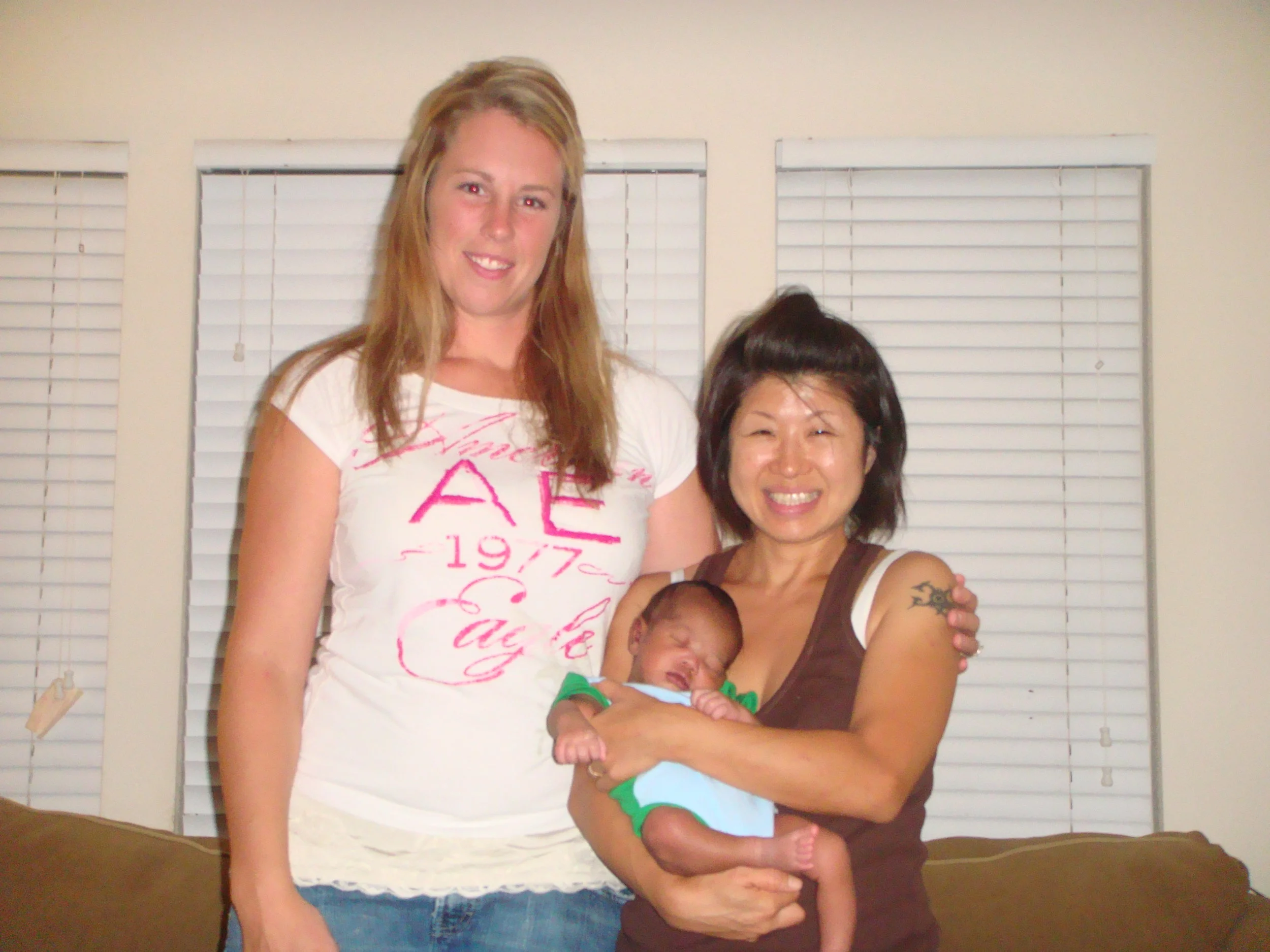
First doula client in California
My first experience as a doula remains vivid in my memory, especially now as I reflect on those early days when insurance coverage was just a brief overview in our trainings. Doula support at the core has remained steady, but everything else to do with it has rapidly evolved. I recall that birth walking through the halls of Naval Medical Center San Diego (Balboa), guiding my client through her contractions. Her husband was deployed, and I had volunteered with an organization that provided doula support for military families. While she was the first of many clients, I often think of her. Little did I know, that moment was the beginning of my journey to where I am today.
That initial foray into doula work plunged me into a world filled with unique challenges, navigating the regulations of overseas military bases, leading doulas when I was still learning as a newer doula myself, educating our military families and community as a whole about doulas. There were times when I’d be supporting families without a backup doula due to fellow doulas either moving or having a baby of their own. I often found myself in uncharted territory I was completely unprepared for, embracing the rhythm of the season, trusting my instincts and staying attuned to God's guidance. I prayed that I was making the right choices throughout the journey. I ventured alongside clients to learn about Japan's birth cultures and delved into SOFA status regulations when military families faced bogus restrictions on home births or placenta encapsulation, taught new doulas, built relationships with our local base programs and hospitals, said goodbye to many great doulas who became close friends. Consistency and continuity became a key player amidst the constant turnaround. When the time presented an opportunity I was able to attend a Senate of Armed Forces Committee Meeting back in the states and yes, I was that person who boldly handed out educational material to other attendees about doulas and the military. Not sure if that was allowed, but I did it anyways. Always hoping it would fall into the hands of the right person.

Camp Lester Naval Hospital, Okinawa. Photo Credit: Military Bases.Com
During this period, I dedicated myself to establishing private organizations on military bases and cultivating relationships within the Military Treatment Facility. I recalled advice to find a champion in the hospital, and I did—an incredible nurse who sadly lost her life and baby to HELLP syndrome. It would not be the only time a difficult circumstance resulted in another pivot. One particularly memorable moment this nurse and I had together; during a birth, the provider was visibly irritated as the parents asked questions to better understand their care. Afterward, she encouraged me to keep pushing forward despite the ongoing attitudes from some providers, a message that resonated deeply with me because at this point in time, I was one of the only active working doulas on island and I felt like I had no one in my corner to call and talk me through these experiences within the Military Healthcare System. Yet I persisted because there was a need for change and support not only for families but birth professionals who supported within and outside our military structure.
“ To all healthcare providers: if your hospital has a doula policy, I encourage you to review it, involve your trusted local doulas, and familiarize yourself with other certifying organizations. Ask your team what purpose does this serve and why it’s being implemented. I do not, as many others, align with just one certifying body, hold a membership, or answer to organizations that I am not certified through. Therefore, I will not be signing any policies that reflect them. ”
In the beginning there were times I would often look for support from my certifying body. They had little to no presence overseas, limited experience with military contexts nor did they offer support to fellow military spouses like myself. When I finally touched base, it was advised not to reinvent the wheel, but the reality was that there was no wheel to begin with. That was an eye opening experience which told me they were not in a place to provide guidance or feedback regarding doula support in the military system. Support and resources for birth professionals in my community were truly non existent aside from what was created on a local level. This was also a time before the internet became what it is today, making connections while living overseas resulted in limited access to information and being shared like it is today. Despite limitations, our community flourished. Ways were sought to educate military leaders, I participated in working groups on the island, and connected with larger organizations to raise awareness beyond the Pacific—even though we often felt dismissed or overlooked. No one wanted to talk about birth apparently even though there were glaringly big issues that needed addressed the system.
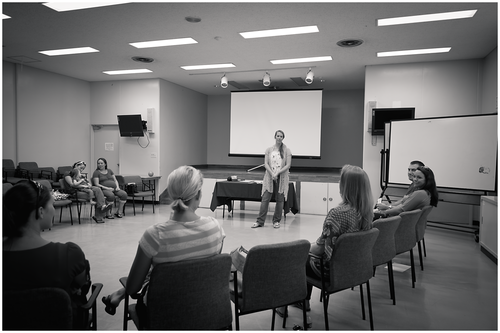
One of many educational group talks with military families.
At times, it seemed the hospital might stop allowing doulas altogether, and those moments were isolating. Eventually, I found strength in two remarkable mentors, Gerri Ryan and Linda Herrick, close friends and colleuges, and a military community that courageously advocated for better birth experiences and options. Despite harsh interactions and criticism from those unwilling to learn or support, I knew I was on the right path.
I remember discussing Tricare coverage with fellow doulas, feeling uncertain about where to begin. I just knew it had to come from the top. I never imagined that I’d be here today talking to you about Tricare and doula coverage, witnessing how everything seems to come full circle.
Here we are 2024 and I’ve been back stateside since 2017. When the news broke that Doula coverage for Military Families was being introduced as a bill, it was a moment filled with anticipation and apprehension. A group of doulas who had dedicated much of their careers to understanding the needs of military families came together to make formal recommendations to the appropriate personnel. Yet, no one ever reached out or followed up with us after it was submitted. To this day, when I read the Federal Register, I can’t help but notice some of the very same language from our documents appearing in there.
I remain skeptical that any doulas were consulted or had a seat at the table, despite our numerous meetings and phone calls. There are only so many people one can speak to before realizing they all seem to lead back to the same individuals.
Nearly three years after the CBSD demonstration was voted into the NDAA and integrated into Tricare, I anticipated challenges. Some of which I hadn’t foreseen or fully understood, especially since, as a doula, I’ve never worked with insurance. With many states now adopting Medicaid coverage, doulas are grappling with this new territory of billing, medical terminology, insurance codes, and everything else that comes with it. When this demonstration launches overseas, it limits access to coverage only in the private sector. It also creates another obstacle of military spouse employment, navigating SOFA status regulations, the ability of military spouses to work in host nations, and the fact that many military members give birth on base OCONUS limits access of the program those who are seen by a host nation provider.
Another shift I'm noticing is an increasing interest from organizations and businesses that are suddenly keen to connect with the military doula community, despite having shown little to no interest in the past 16 years of my experience as a doula. I can’t help but question whether their motives stem from a genuine desire to support our military birthing community or if they're simply looking to profit or gain influence. As a result, I’ve chosen to approach these interactions cautiously, especially with those who have never engaged with military doulas, birth professionals, or families, or who seem to have ulterior motives.
In closing this section, I find the current guidance from the DHA and its contractors to be quite chaotic. While one contractor has made commendable efforts to keep new doulas well-informed, the overall lack of support remains troubling. Recently, it has come to my attention that only one certifying body is being consulted by one of the Tricare contractors, despite its limited grasp of the unique needs within our military doula communities, both CONUS and OCONUS. This exclusive approach risks fostering inconsistencies and misunderstandings throughout the system.
More to come….
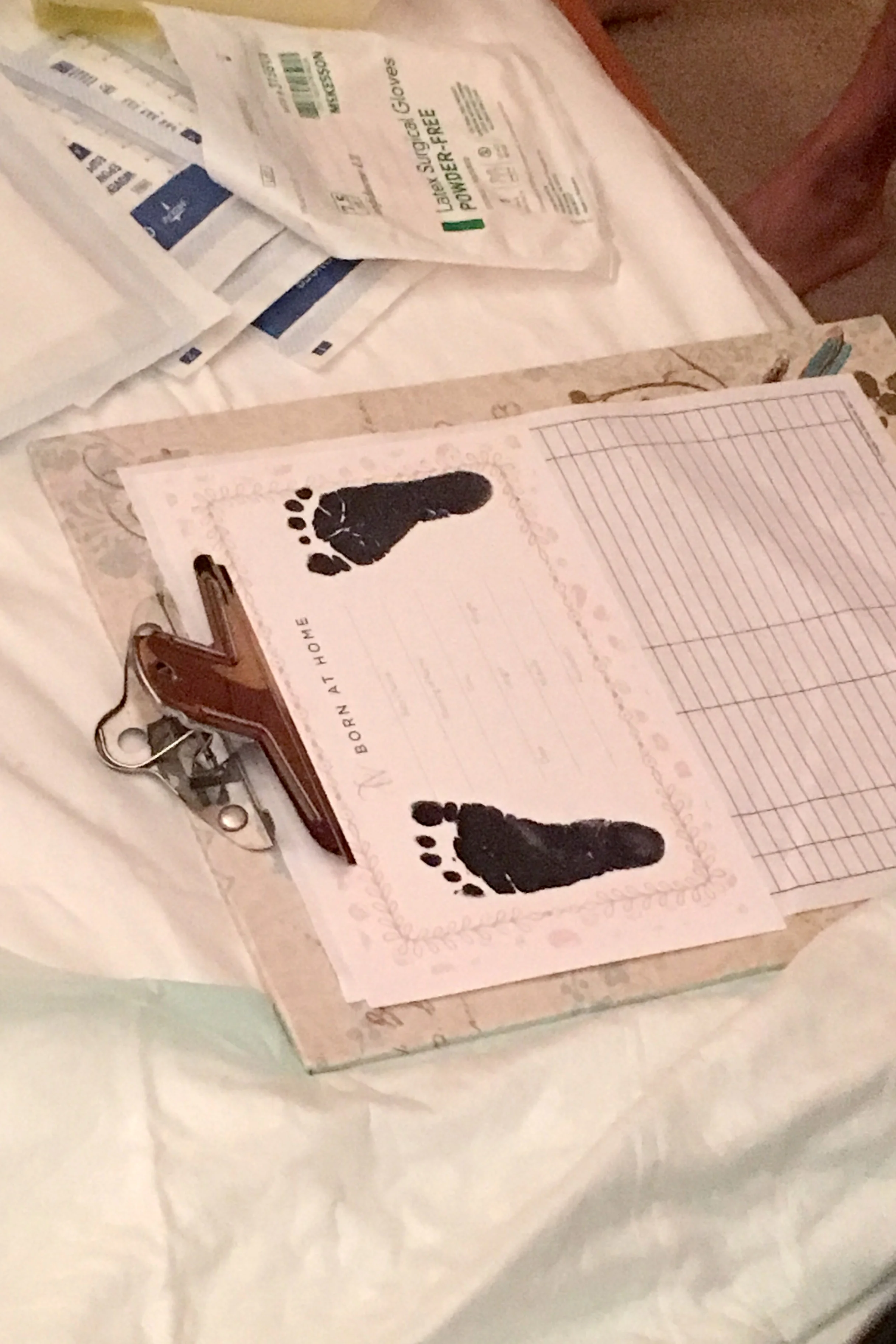
The Birth of Loralai Elaine
I had one LONG and INTENSE contraction the whole time I was up and quickly went to go lay back down. I was feeling pretty sick and started to wonder if I wasn't going into the transition phase as I remembered feeling that way with Hayes. But I thought that surely it couldn't be the case as my contractions were still so inconsistent and not quite 2-3 minutes apart. I was definitely starting to lose control of my emotions. Nate was airing up the birth pool and I was feeling pretty concerned about everything that was happening. Just as I was having another contraction, my sister stepped in the door. I felt my water break, which I immediately told her, and I felt the baby’s head drop.
The week before I had Loralai, I started trying to do a few things that might induce labor. My sister had arrived from North Carolina and I wanted to make sure she would be able to be my doula birth before she had to head back! I went and got an adjustment from my chiropractor to make sure baby would be able to settle into the best position for birth. She flipped back and forth ALOT the last week and couldn't seem to decide on whether she wanted to be LOA or ROA. I did a lot of exercises from the Spinning Babies website as well. I also went back to chiropractor and had some acupuncture done to see if that would induce labor, but all it did was make for some slightly more intense Braxton hicks contractions. I walked and walked and walked and ate my eggplant parmesan casserole, but to no avail. I was hoping for baby to come either a day before or a day after the 4th of July but that wasn't in the cards for me.

That whole week, I would wake up around 3 or 4 am with some intense consistent contractions, but they would always fizzle out around 7am. Leaving me disappointed and tired. I can only assume I was experiencing prodromal labor and that was incredibly frustrating! Friday morning those contractions started again. I tried to not get excited when they lasted past 7am.
I woke up and got breakfast for Hayes and I, then we went on a walk. When we got back, they were still happening, but only about 1 every 45 minutes. I tried to rest, bounce on my exercise ball, and distract myself with watching TV. My husband, Nate, got home from work and I was able to take a nap, but not for long as the contractions were starting to pick up. They weren't very strong but they were noticeable enough to keep me from being able to rest well. We ate supper, got Hayes ready for bed and rocked him to sleep. I continued to have contractions. They just weren't consistent whenever I timed them, so I tried to ignore them and rest. It was around 10pm when they were getting stronger and I think I called my sister to let her know they were picking up, but I figured it would be a while before we’d need to notify the midwives.
With my first child, Hayes, everything moved so slowly and I assumed it would be the same. I was waiting for that point when they'd last for a minute, be 3-4 minutes apart for an hour. I would lay on the couch and time them. They'd just be all over the place! No real consistency and vary in intensity.
Nate fell asleep. I'd get up to go to the bathroom. They'd be really hard to breath through and it would be like one long contraction until I laid back down. Then they'd space out again. I woke up Nate and he kind of helped me through them, but apparently I was handling it well enough that no one felt like it was getting close.
I honestly didn't think it was close! I had called my sister again and wasn't sure if she should come over yet. She sounded unsure if she should yet either, but we decided to have her go ahead and come since I was feeling like needing more help with focusing.
I texted Brandi, my midwife, and told her that I had been having contractions since 11pm. Also that they were starting to pick up and lasting about 1 minute, happening every 7-10 minutes and that we'd be calling her in a while. This was at 1:34am. I was starting to get nauseous and got up to go to the kitchen and get some frozen grapes to eat. I had one LONG and INTENSE contraction the whole time I was up and quickly went to go lay back down. I was feeling pretty sick and started to wonder if I wasn't going into the transition phase as I remembered feeling that way with Hayes. But I thought that surely it couldn't be the case as my contractions were still so inconsistent and not quite 2-3 minutes apart. I was definitely starting to lose control of my emotions. Nate was airing up the birth pool and I was feeling pretty concerned about everything that was happening. Just as I was having another contraction, my sister stepped in the door. I felt my water break, which I immediately told her, and I felt the baby’s head drop. I pretty well knew I'd be having a baby soon. My sister sat on the floor by my head, kept me calm and helped me breath. It was such a relief to have her there as her presence was very calming. I finally felt in control again. I told her I felt like pushing and I believe at that time, Nate got on the phone with Brandi, who was headed our way, and told her that. I was trying VERY hard to not push with contractions. But it was getting impossible. My sister told me she might have to look to see if she could see the baby’s head.
It was then that I had another contraction.
My body took over and I pushed.
I stood up and immediately felt the head drop down and out!

Nate and Amanda were on the phone with Brandi while she was talking them through the delivery process. I just remember praying that everything would be okay. That God would protect me and my baby. That baby would be healthy.
My sister stayed very calm and kept me calm. I don't remember feeling scared or anxious. I just knew I had to finish the task. With one last push, Nate caught our baby girl at around 2:45am.
I had no real pain with pushing. I never really felt like we were in danger. I can only assume that the Holy Spirit was very present with us throughout the whole process and He was keeping everyone calm and collected. And obviously kept our baby from any complications that can come from childbirth.
I sat on the floor and held Loralai who was crying and pooping everywhere. I was just in absolute awe of how quickly and easily she came.
Now as all this was happening, Brandi got into a car accident while trying to tell Nate and Amanda how to deliver the placenta. Nate had to call our other midwife, Kathy, who is Brandi’s mother, to tell her what happened but also that we still needed help with the placenta and other things!
Things were getting a little stressful because it seemed like it was taking a little too long for me to deliver the placenta. The midwife had told me to stand up. As I did, the placenta was delivered and fortunately there wasn't too much bleeding afterwards. I was helped into bed where we waited for our midwives to arrive.
We all just sat there. Pretty dumbfounded at the events that had just taken place! My photographer, Jenny Good, had arrived (she showed up shortly after Loralai was delivered) and took pictures. I was a little disappointed she had missed the birth but it was no fault of her own as she didn't get a phone call to come out until I was pretty well pushing!

The midwives finally showed up, checked me and Loralai out and we both were just perfectly healthy. No tearing for me and she was a healthy 8lbs 3oz.
Brandi seemed to be doing fine. As it turned out though, he hurt her foot pretty bad and also had a concussion! I felt so awful for her and her new vehicle also got totaled. I felt almost like I was to blame for her accident. If only I had called her to come out sooner. All of this could have been avoided. But I know that everything happens for a reason and looking back I don't know how the situation could have really been remedied as I really never felt like it was urgent that we call sooner.

Hayes woke up shortly after they got there; I'm still surprised he didn't wake up sooner with all the commotion happening. Nate brought him in to meet Loralai and he seemed pretty unimpressed and mostly just wanted mommy to hold him. I'm sure he was pretty confused with everything happening and probably pretty tired since it was around 4am, but it didn't take long for him to warm up to her later that day. I didn't have any issues getting Loralai to nurse, and the whole healing process was so much better this time around. Hayes’ birth and recovery was just all around difficult, so I felt very blessed to have an easier second time around. Looking back, the birth of Loralai still amazes me. It's crazy what our bodies can do when we just let them take over and not try to intervene. I thank God for His provision over us and over the birth, but hope the next time around we can have our midwives present!
Photo credits: Simply Good Photography by Jenny Good

Learning from the sensei
For as long as I've lived in Okinawa I should be fluent in Japanese now. Sadly, I am not. Over the years I've learned to understand and pick up on what most conversations are about. But don't ask me to speak it back. So far I have been able to maintain with my version of "Janglish", a terrible combination of broken English mixed with small phrases in Japanese.

I'd like to think that most locals appreciate the effort. Or perhaps they really think, "Why is this 6'2" American keep saying "Daijobu desu" or "Dou itashi mashite" religiously. I believe I'll stick with my dear friend Kyoko who's been an amazing translator and colleague. So when my jokes and humor don't make sense to the staff, she can explain why I sound like an ding dong.
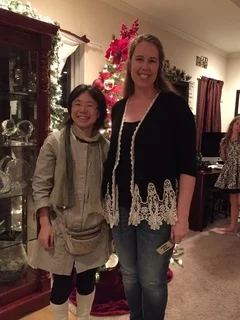
Photo courtesy of Dr. Fumi ( I forgot to take one with my phone) Christmas dinner 2016.
Back on track. I am feeling quite nostalgic today and have some time on my hands. I figured I might as well sit down and share with you some of my experiences in Okinawa.
I feel very fortunate to build relationships with providers in the Japanese community. We even found a home birth midwife a few years ago! There is so much to learn about this amazing culture. When Yui Clinic was scoped out, it was through a couple of expecting friends looking for options off base. For many, the thought of giving birth off base was daunting and scary. Then being told that your baby will not be an American citizen and it costs thousands of dollars turns many people away. (Which this is absolutely NOT true, unless you have Japanese blood pulsing through your veins, you are not going to be a Japanese citizen. Financially, delivering out in town can cost around five thousand dollars but it's almost completely reimbursed by Tricare). The only time I've heard things being a problem is when a baby decided to come quickly and no medical professional was there to witness. Then the paperwork and insurance can be a bit of a headache.
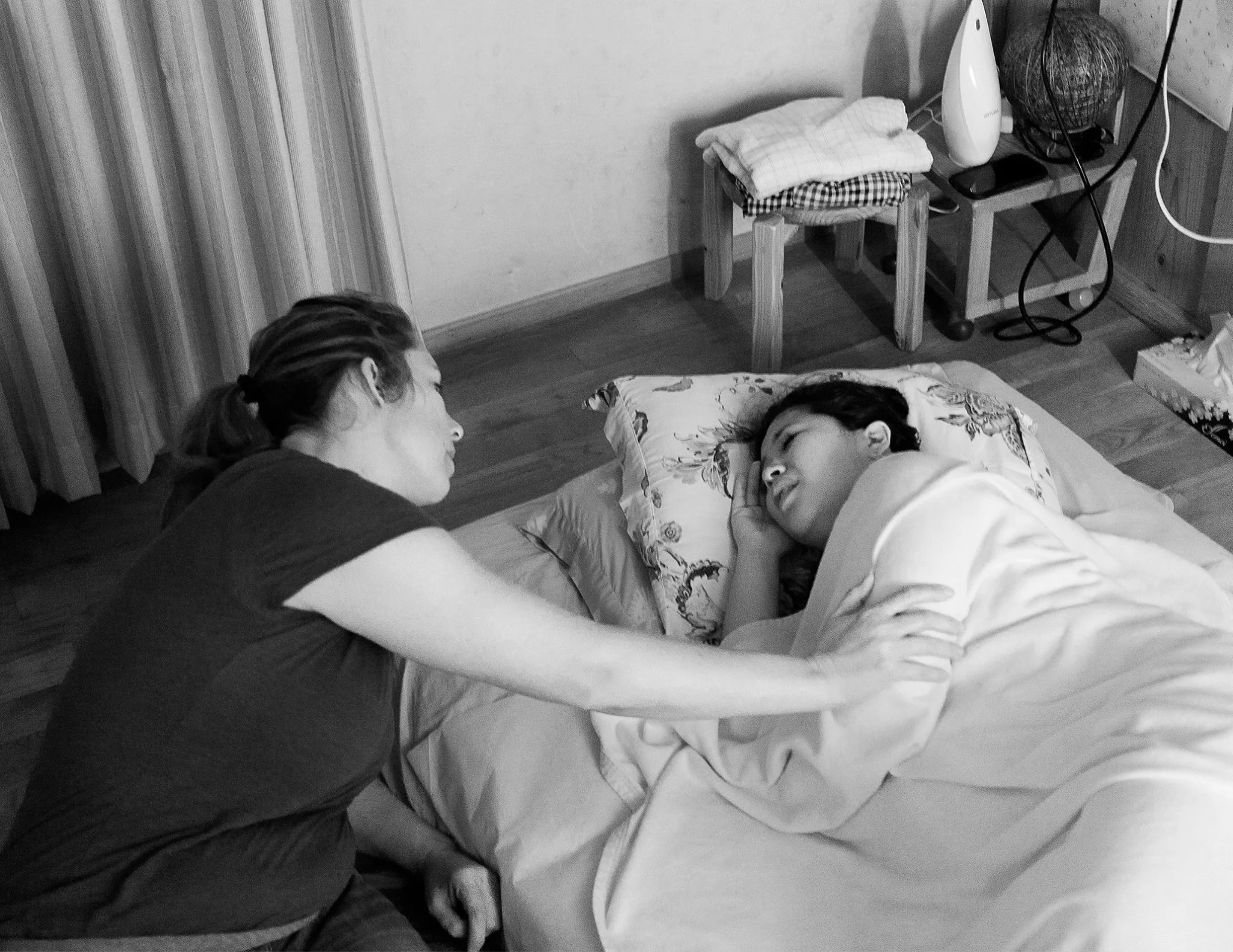
Photo used with permission of the family.
What we found was a place that was not like many other places in Okinawa. I loved learning more about the birth culture of the country I lived in.
The majority of my doula work has been on base. To which I am pleased to say the base hospital has been very open to supporting families in their births, doulas and birth plans. It surely does take teamwork. However, there are aspects of the Japanese culture I would love to see incorporated into our more American way of practicing.
One major one would be warmth. Keeping a mother warm that is. I was always taught that if a mom is shaking after delivery, it's the hormones. Completely normal right? In time of going to the births at Yui, I've never witnessed moms shake or shiver. When the woman is in labor, there's a fan and one can turn on the AC, but close to delivery it gets turned off. Yes, it may heighten the smell of birth and arm pits but its quite amazing to see the outcome. I've also been told that staying warm helps a mother's body recover quicker and is good for circulation. Perhaps, it's the environment this takes place too. The rooms is often dark. Just an overhead light or the small lamp putting out just enough energy to facilitate whats taking place.
The quietness. I swear the doctor and midwives are like silent ninjas. Even if special circumstances arise, the needs are met very quickly. While there's much commotion going on, people aren't yelling and orders coming from a million different directions. The atmosphere brings a sense of peace and calm to the life changing moment that's about to take place.

A seasonal, traditional Okinawan meal served. Photo credit: Yui Clinic
The postpartum care. All I can say is WOW! Again, I can only speak for my experiences and other places may vary, but it is a common practice to stay in the hospital for about a week after delivery. This is something that I feel is so beneficial. A new mother is allowed to bond with her baby while having continued support with breastfeeding, fully prepared, nutritious meals and baby care. They also receive postpartum massages, cranial sacral sessions and breast massages if needed.
In my time here, I've also witnessed a cesarean off base, which many would be floored to hear what it was like, so I'll save that for another time. Let's just say it can be common to practice a very family centered/gentle cesarean. In the absence of a medical emergency of course.
I know my families season is up here in Okinawa, but I have learned so much. Some of these places didn't have to open their doors to the American community. I have found that mostly they are very willing to helping. I may be leaving but I will have friends for life here in Okinawa. I wished we could build more of a bridge between our cultures because there is so much available to us. I personally drawn to Chinese Medicine, body work, homeopathy and have even acclimated to the warmth of the rooms. So get your socks on mommas!
Yui clinic staff